

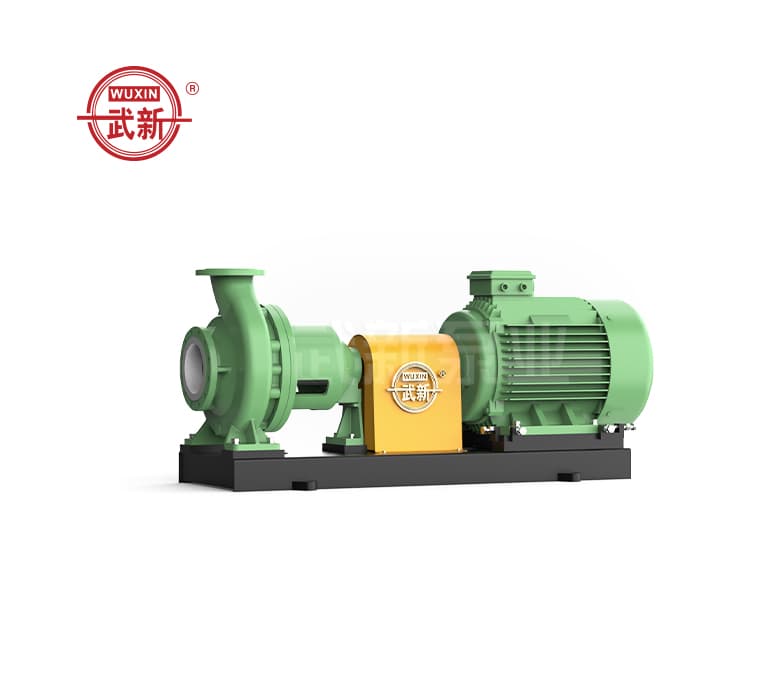
 IMCH Fluoroplastic-lined Magnetic-drive PumpThe IMCH magnetic-drive pump uses fluoroplastic wetted parts. The casing and fluoroplastic are combined by high-temperature sintering and molding, with a magnetic drive and double-layer containment shell.
IndustryApplications
Industry Applications
Understand applications by duty
Electroplating and surface-treatment liquid transfer
For plating baths, pre- and post-treatment liquids, rinsing, recovery, and circulation, review chemistry, metal ions, particles, temperature, and operating mode.Acidic or alkaline liquids, salt solutions, rinses, and recovery streams can change material compatibility through additives, metal ions, contamination, and temperature.
Circulation, filtration, tank transfer, and low-level lifting have different suction conditions. Review installation, allowable particles, minimum flow, and maintenance draining and isolation separately.
Typical media and duties
- Acidic or alkaline pre-treatment liquids
- Plating baths, salt solutions, and additive mixtures
- Rinsing, recovery, and tank-transfer liquids
Applicability review
- A complete bath formulation or material-compatibility list is available
- The duty is identified as circulation, filtration, transfer, or low-level lifting
- Maintenance draining, flushing, and personnel protection are defined
Information required before selection
- Medium name, composition, concentration or mixture, density, and viscosity
- Normal, minimum, and maximum temperature, including crystallization, vaporization, or solidification tendency
- Normal, minimum, and maximum flow and head requirements
- Inlet pressure, discharge pressure, system curve, and available NPSH
- Solids content, particle size, hardness, shape, fibers, and settling behavior
- Compatibility of wetted, bearing, seal, or containment materials
- Installation, continuous or intermittent operation, draining and cleaning, and site protection conditions
Suggested review workflow
- 01
Create a medium list and record physical-property changes in normal and abnormal states.
- 02
Use the system curve and design duty to review flow, head, inlet conditions, and control method.
- 03
Compare pump construction, wetted materials, sealing arrangement, internal circulation, and auxiliary systems.
- 04
Complete the final review against the latest exact-model manual, order drawing, and site safety requirements.
Limits and safety boundaries
- An industry category does not determine pump construction, materials, or size.
- Several endpoints of a series range are not one simultaneous duty point for every size.
- Flammable, explosive, toxic, highly corrosive, or extreme-temperature media require project risk review and site safety approval.
- This page does not replace process design, piping stress analysis, electrical rules, order drawings, or operating procedures.
Related product entries
IMCH Fluoroplastic-lined Magnetic-drive PumpThe IMCH magnetic-drive pump uses fluoroplastic wetted parts. The casing and fluoroplastic are combined by high-temperature sintering and molding, with a magnetic drive and double-layer containment shell.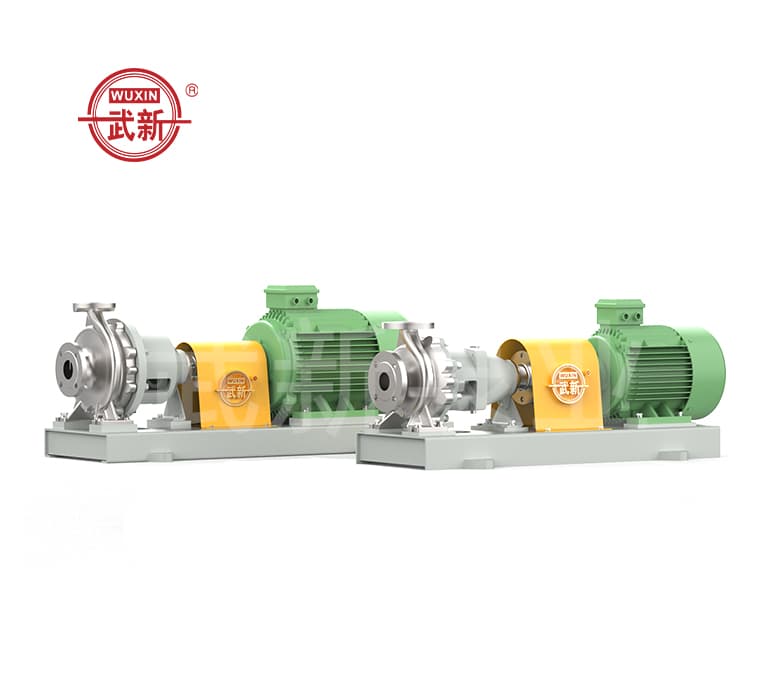 CQB-L/CQB-H Magnetic-Drive Centrifugal PumpThe CQB-L and CQB-H magnetic-drive centrifugal pumps use a single-stage, single-suction, horizontal configuration. Their external mounting dimensions match the IH chemical centrifugal pump, and an IH mechanical seal of the same size can be interchanged according to the selected model.