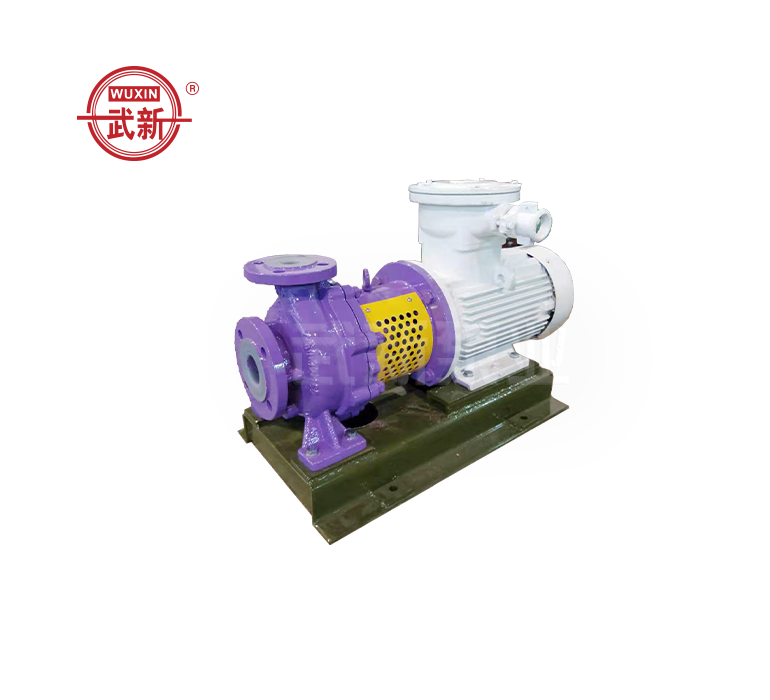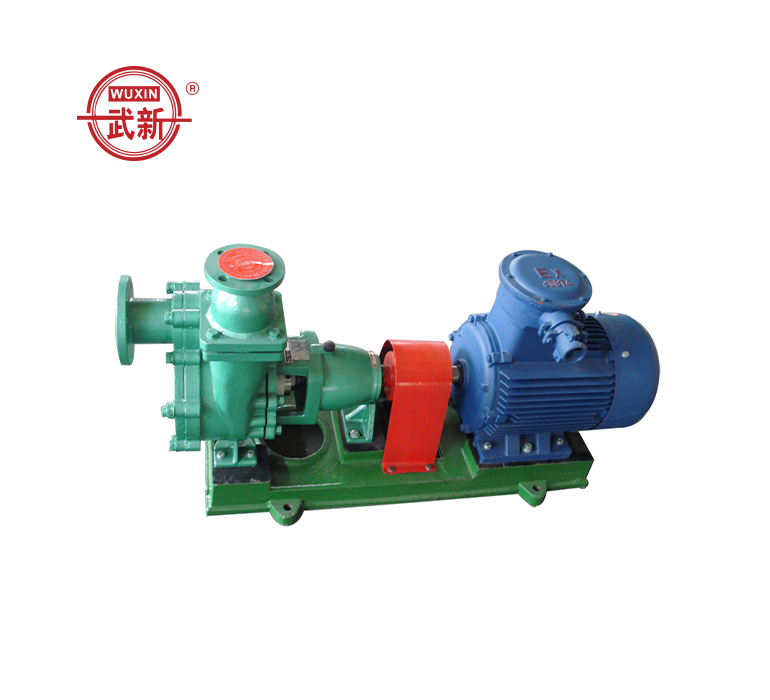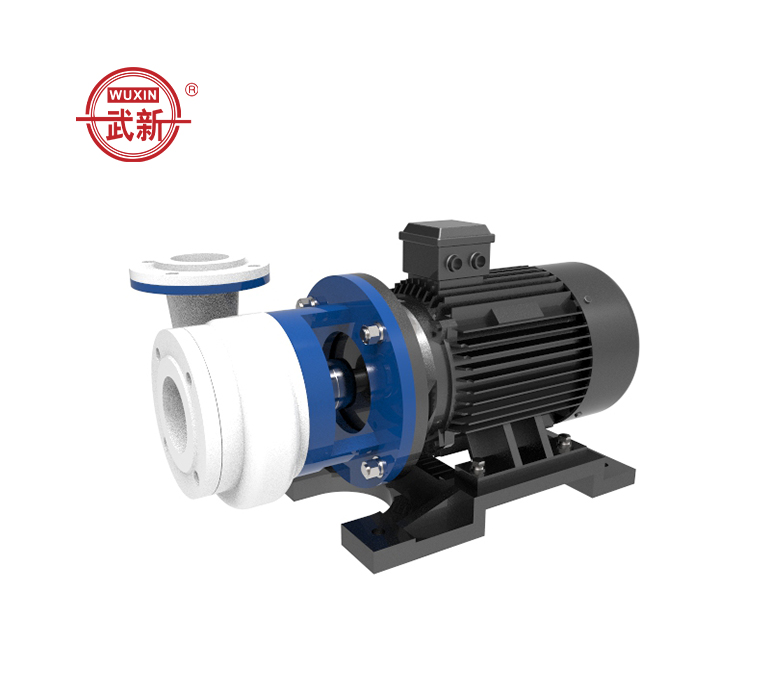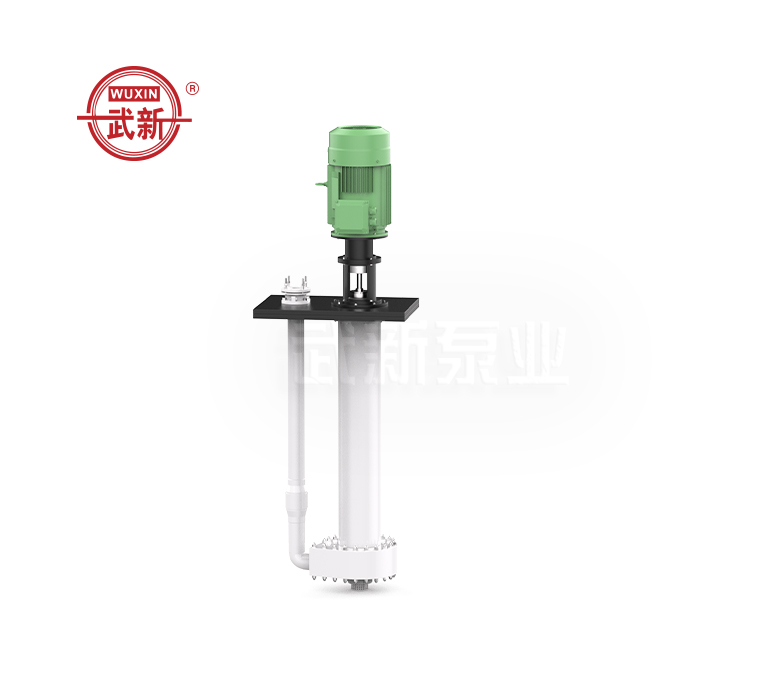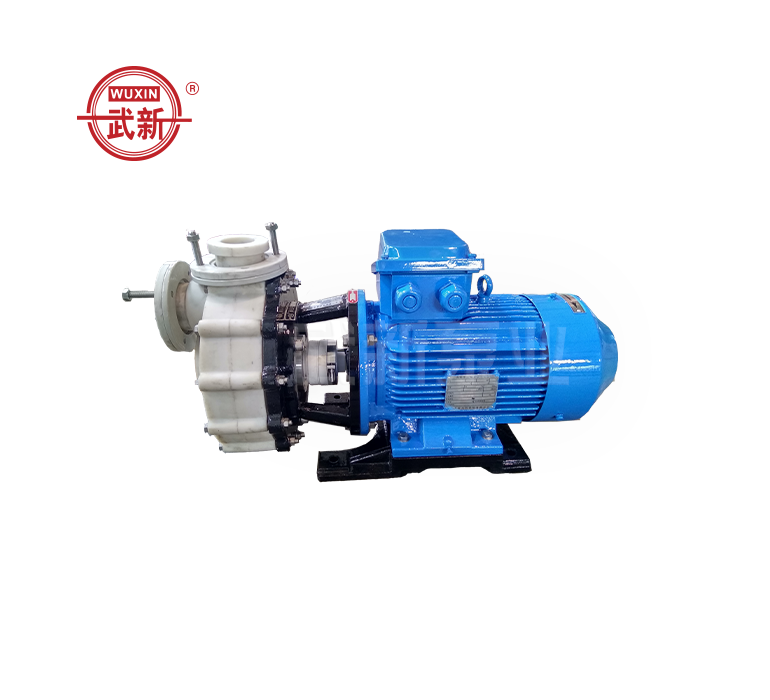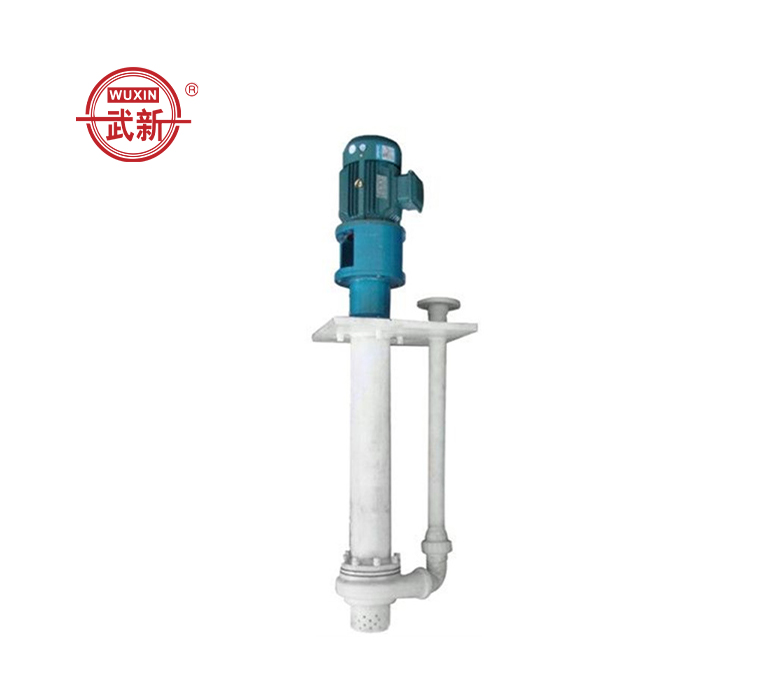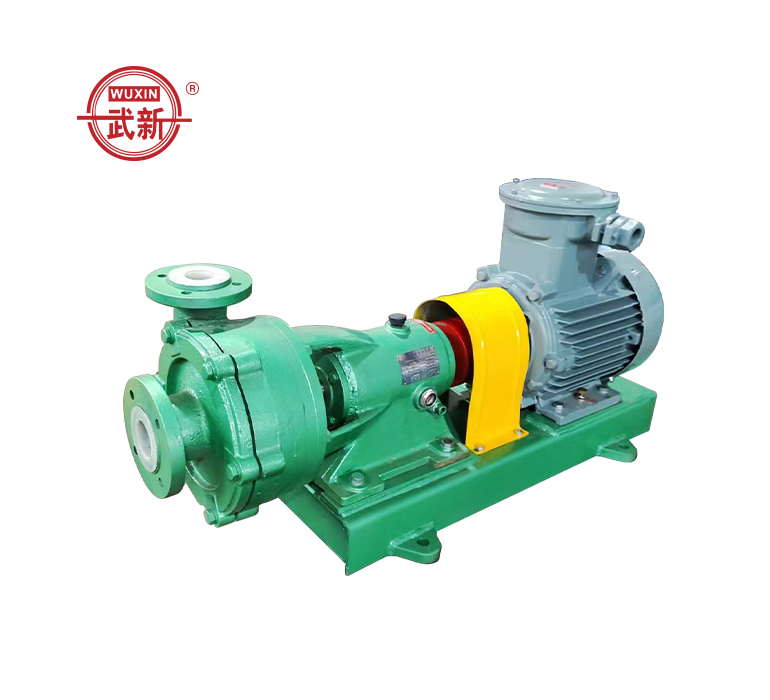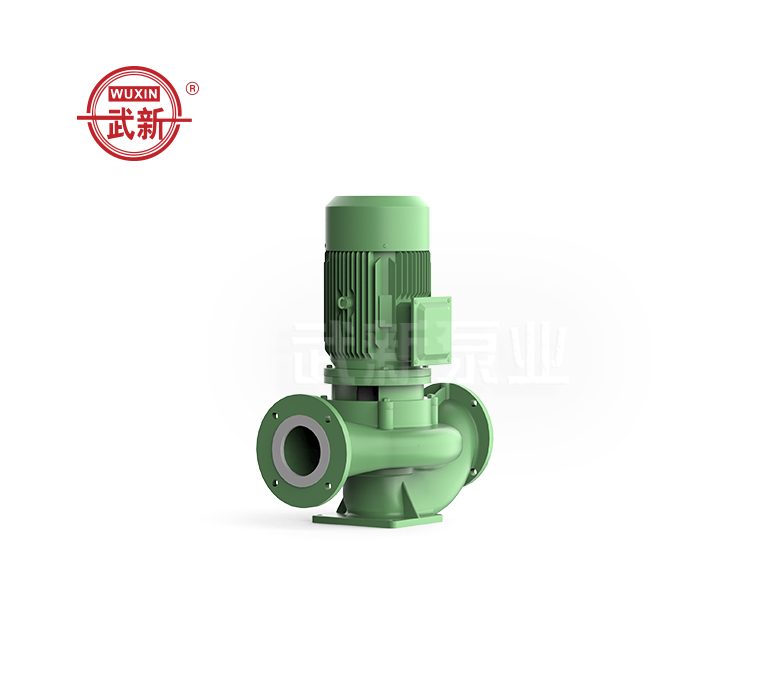

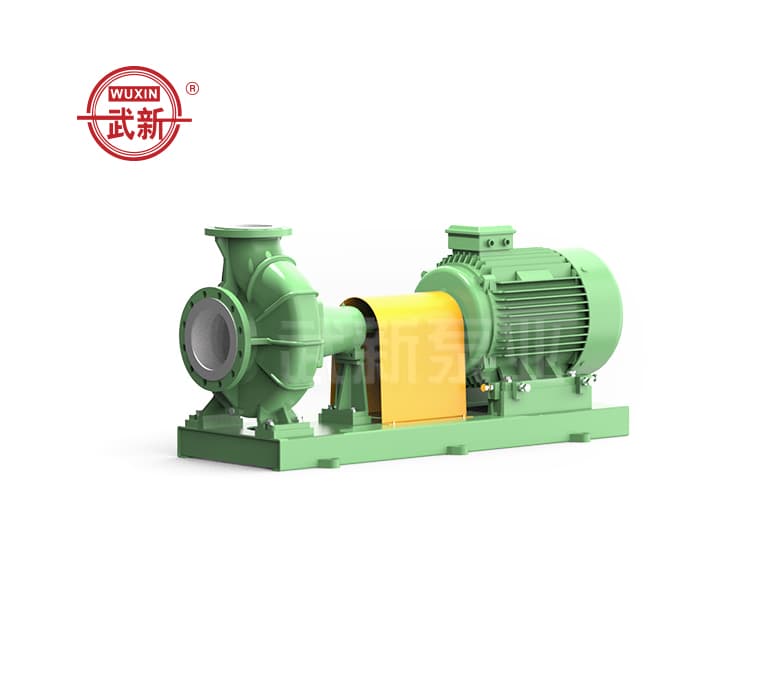
IHF Fluoroplastic-Lined Chemical Centrifugal Pump
Product inquiry: 0523-84832479Product introduction
The wetted passages of the IHF fluoroplastic-lined chemical centrifugal pump use fluorinated ethylene propylene FEP (F46) or high-fluoroalkyl vinyl ether PFA. A special high-temperature sintering and compression-molding process anchors the fluoroplastic firmly to the pump casing and components, combining rigidity comparable to that of a metal pump with resistance to various chemical media. The design is described as offering high-temperature, high-pressure and strongly corrosive duty capability, high mechanical strength, economic value, long service life and a wide application range.
Product presentation
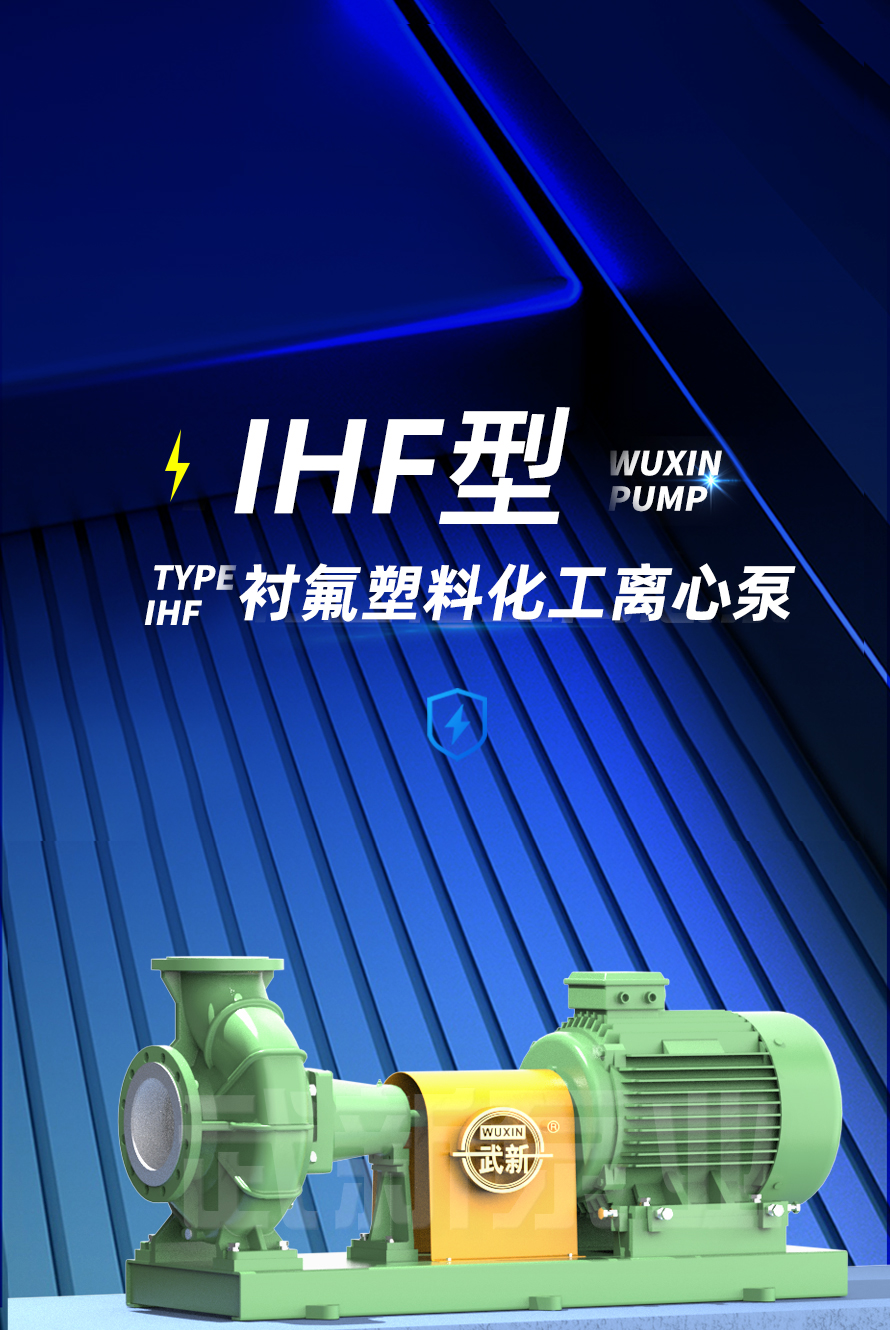
- High-temperature resistance
- High mechanical strength
- Long service life
- Wide application range
Product overview
The IHF fluoroplastic-lined chemical centrifugal pump is identified by the IHF model designation and is intended for the transfer of a range of corrosive chemical media. Its casing, cover and closed impeller use a fluoroplastic lining combined with metal pressure-retaining construction.
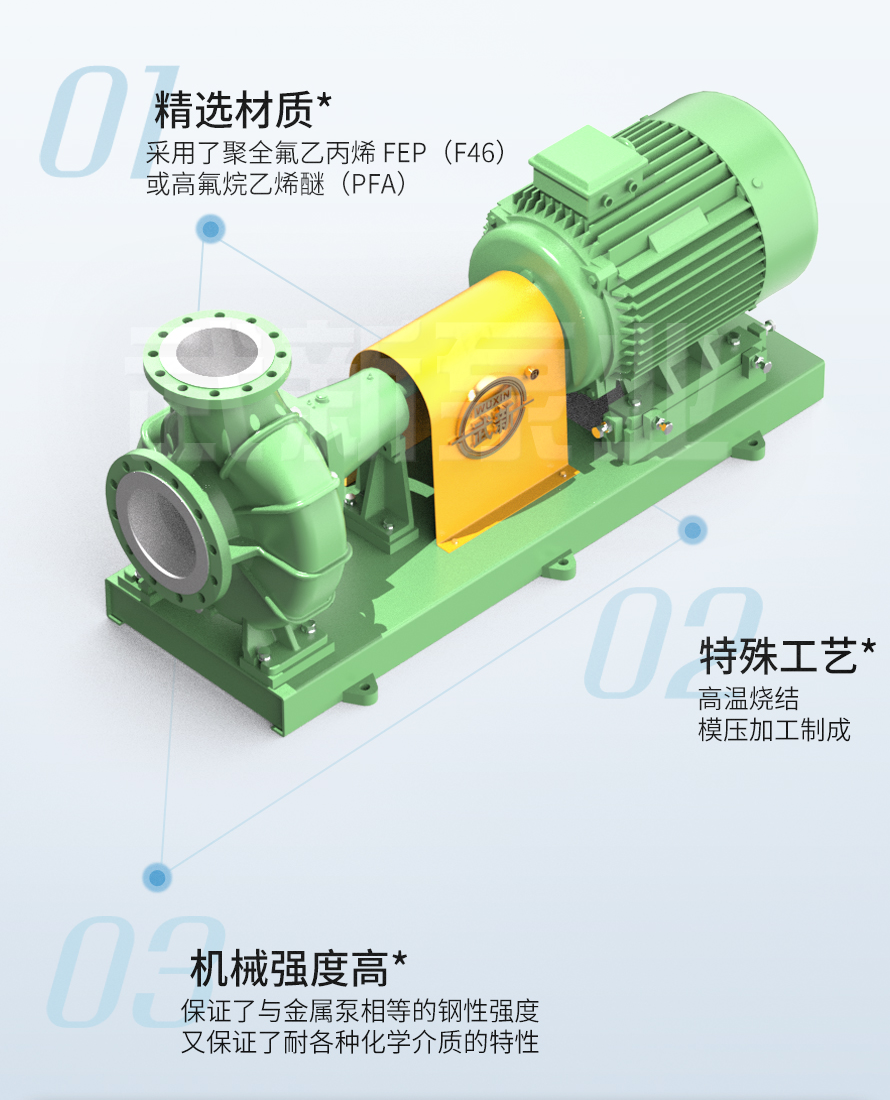
IHF fluoroplastic-lined chemical centrifugal pump construction
- 01 Selected materials*: Uses fluorinated ethylene propylene FEP (F46) or high-fluoroalkyl vinyl ether PFA.
- 02 Special process*: High-temperature sintering and compression molding.
- 03 High mechanical strength*: Provides rigidity comparable to a metal pump while retaining resistance to various chemical media.
Product information
| Product name | IHF Fluoroplastic-Lined Chemical Centrifugal Pump |
|---|---|
| Brand | Jiangsu Wuxin Pump Industry Co., Ltd. |
| Product model | IHF |
| Size | Customized to customer requirements |
| Place of origin | Jingjiang, Jiangsu |
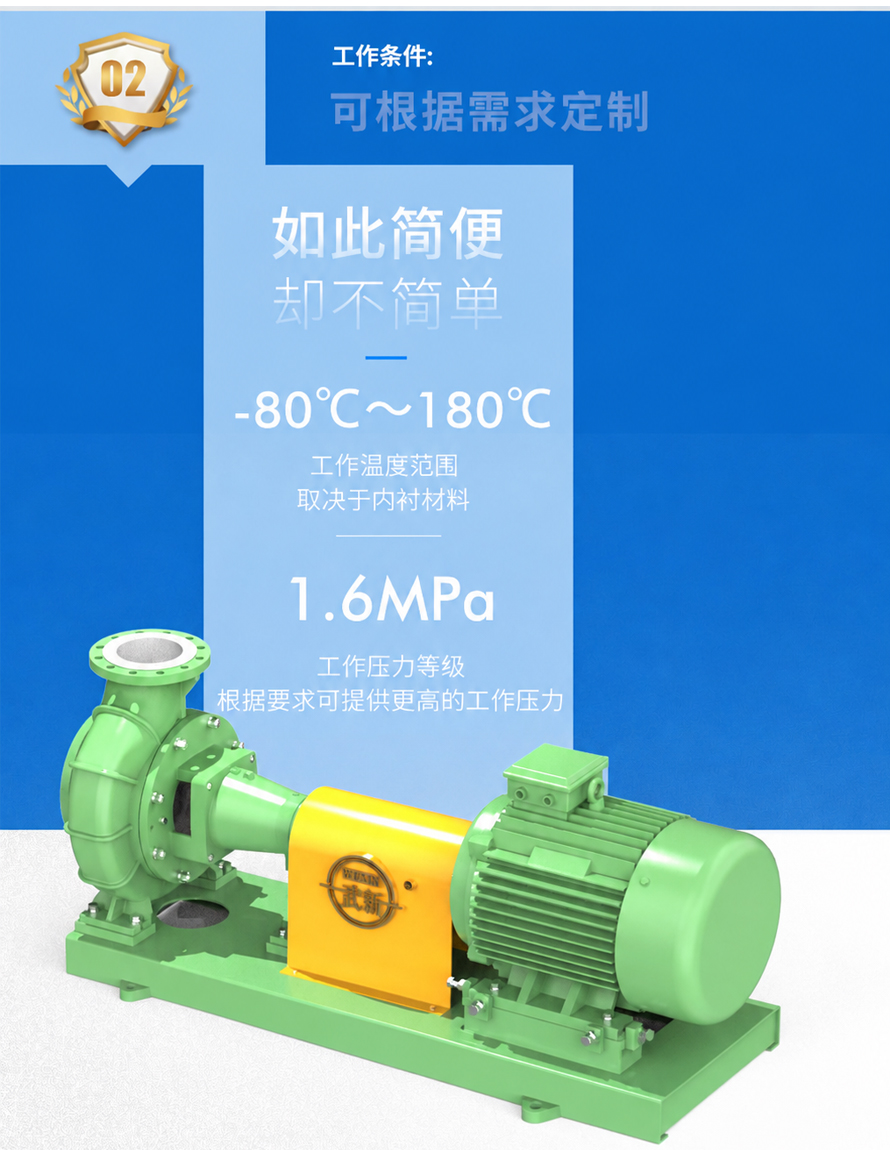
| Working conditions | Working temperature range: -80°C~180°C (depending on lining material) |
| Working conditions | Working pressure rating: 1.6MPA (higher working pressure available on request) |
| Application range | Suitable for chemical, pharmaceutical, petrochemical, papermaking, metal smelting, food, wastewater treatment and other industries |
Note: Confirm the final dimensions, pressure rating and mechanical-seal configuration against the selected model, pumped medium and actual duty, and with the supplied technical documentation.
Main applications
Suitable for chemical, pharmaceutical, petrochemical, papermaking, metal smelting, food, wastewater treatment and other industries.
The pump can handle chemical reagents including acids, alkalis, salts and organic solvents at any concentration, as well as strongly corrosive and strongly oxidizing media.
Working conditions
| Working temperature range | -80°C~180°C (depending on lining material) |
|---|---|
| Working pressure rating | 1.6MPa (higher working pressure available on request) |
Structural design features
- The pump casing and cover are lined with fluoroplastic. The closed impeller contains a high-strength metal insert, and the impeller and shaft sleeve form an integrated structure that reduces auxiliary sealing at the shaft end. The wetted parts in contact with the medium, including the casing, impeller and cover, have no medium-leakage passage.
- The shaft seal is an externally mounted, single-face, balanced mechanical seal with automatic pressure adjustment. It relies on the medium for self-lubrication and requires no external cooling liquid.
- Mechanical seal model I: WB2 — the stationary ring is high-alumina ceramic and the rotating ring is filled polytetrafluoroethylene (PTFE). It is suitable for clean media with strong corrosivity and strong oxidizing properties.
- Mechanical seal model II: 169 — the friction pair may use tungsten carbide (W7), silicon carbide (SiC) or pressureless-sintered silicon carbide (SSiC), selected according to the medium and duty. It is suitable for slurry media containing particles, with a solids content not greater than 5 wt% and a particle diameter not greater than 50 μm; particle hardness must be evaluated against the actual duty.
- Mechanical seal model III: WXJS — externally mounted double-face cartridge mechanical seal.
- Mechanical seal model IV: WXSJ — externally mounted double-face cartridge mechanical seal.
Product information
| Model designation | IHF Fluoroplastic-Lined Chemical Centrifugal Pump |
|---|---|
| Catalog category | Non-metallic Corrosion-resistant Pump |
Related questions
Are non-metal and fluoroplastic pumps the same thing?
Not exactly. Non-metal is a wider design/material family, while fluoroplastic is one material clue. Solid, lined, clamped, magnetic-drive and sealed designs must still be distinguished.
Do not make unconditional material claims across media or concentration ranges, and do not extend one material/model limit to the whole family.
How is the duty point of a chemical centrifugal pump determined?
Build the system curve from static head, piping loss, equipment differential pressure and pressure conditions at target flow, then find its intersection with the exact pump curve.
Without the exact curve, material list and seal configuration, only the review method can be stated; final size, life or operating outcome cannot be confirmed.
What should be confirmed before selecting or working on pumps for corrosive, flammable, explosive, toxic or volatile media?
Obtain the SDS and complete duty first, identify corrosion, toxicity, fire/explosion, volatility, reactivity and exposure routes, then review wetted materials, containment/disposal, hazardous-area equipment, monitoring, emergency and personnel controls separately. A pump-family name does not establish risk control.
The project owner or responsible team must confirm site safety through professional risk assessment, relief and disposal design, hazardous-area equipment compliance, rescue arrangements and medical and occupational-health requirements.
Which equipment information is needed when requesting an operation manual?
Provide the complete model and model suffix, a clear nameplate photo, order or serial information, current configuration and required language. If the unit has been modified, describe the change so the manual is not matched from the series name alone.
An unregistered file requires public-release approval before it is shared. A filename, product photo or similar model cannot replace complete equipment-identity and revision checks.
What is the minimum data set for pump selection and enquiry?
Provide medium composition, concentration, density, viscosity and temperature; normal/minimum/maximum flow and head; suction, discharge and system pressure; available NPSH; solids or particle data; installation arrangement and space; power supply; and environmental conditions including indoor/outdoor location, temperature/humidity, altitude and hazardous-area classification.
The selection-input checklist gathers process and equipment information. Process design, piping calculations, final material configuration, hazardous-area suitability review and final quotation require the complete project package, and every missing field must remain explicitly open.
What should be checked first for the foundation and installation space?
First confirm foundation dimensions, anchor locations, load capacity and level from the order drawing. Then isolate the unit from adjacent-machine vibration and retain access for lifting, motor removal, inspection and disassembly.
Civil calculations, piping stress analysis, lifting plans, electrical codes, site safety approval and order drawings must be confirmed by the responsible disciplines and project documents. Dimensions from a similar model must not replace order drawings.
Which pumps require coupling-alignment checks?
Use the sectional drawing to identify direct drive, a separate coupling or a vertical shaft arrangement. Apply the model-specific alignment procedure only to the relevant connection; one tolerance does not fit every pump.
Alignment tolerance, jog duration and electrical steps must be determined for the exact model and site procedure. Perform a rotation check only after energy control, guarding and site authorization are complete.
Why is one start-up valve arrangement unsuitable for every pump?
Conventional centrifugal, self-priming and submerged pumps, as well as magnetic-drive pumps with different circulation paths, have different suction states, venting paths and permissible flow ranges. Valve positions must match the exact model and system control logic.
Remote start-up must follow the site authorization procedure. Valve positions, vent cycles and closed-valve duration must be determined from the matching manual revision and site procedure, and must not be transferred across models.
Which signals should be monitored during normal pump operation?
As configured, record flow, suction/discharge pressure, current, speed or frequency, vibration, sound, bearing or critical-point temperature, plus level, flushing, cooling and alarm states.
The site team must confirm continued operation through interlock settings, instrument calibration, root-cause analysis and maintenance permits. Do not restart until the cause and safety conditions are confirmed.
What must be completed before maintenance or disassembly?
Follow site procedure for shutdown, energy isolation, valve locking, depressurization, cooling, draining, flushing or decontamination, and verify that unintended start is prevented. Hazardous media also require the applicable work permit and personal protection.
Do not substitute drawings, part dimensions or materials from a similar model. A single symptom cannot establish root cause or a replacement part without site inspection.