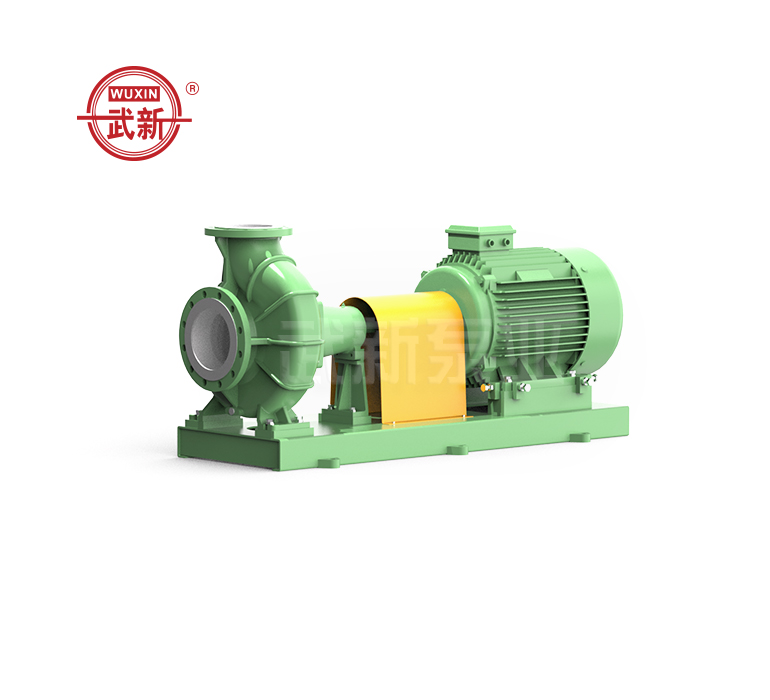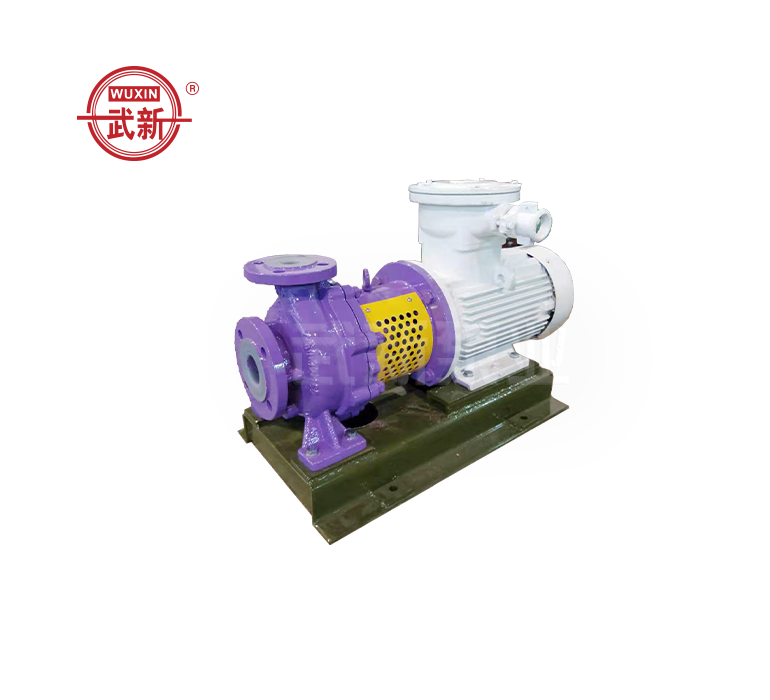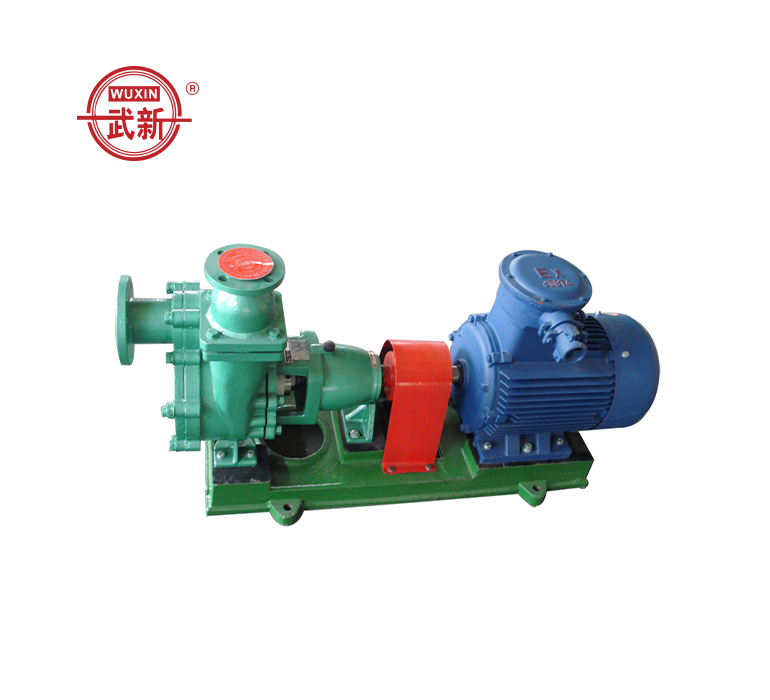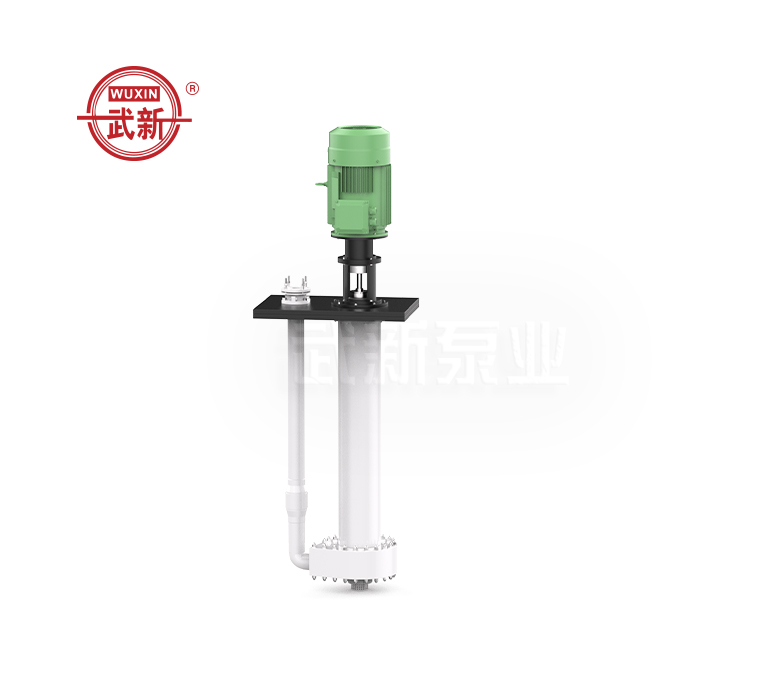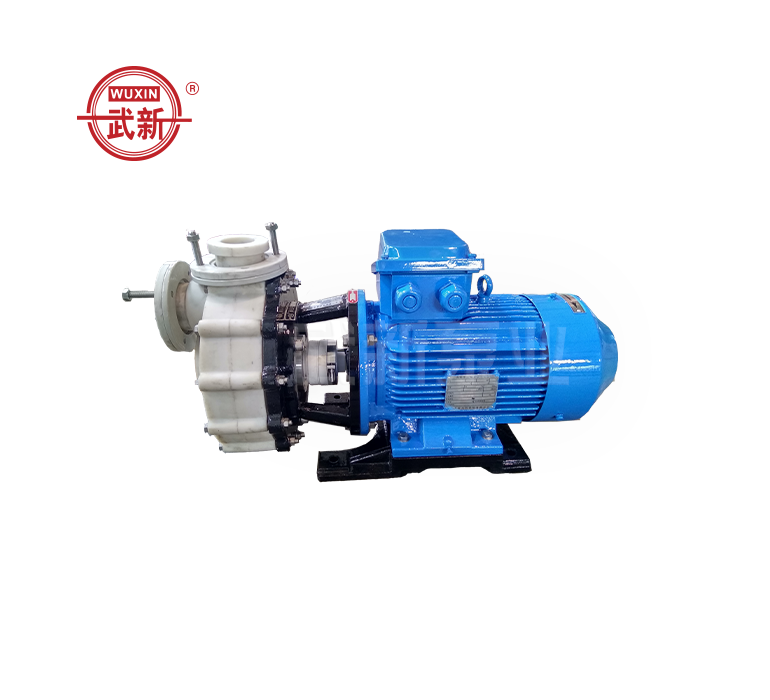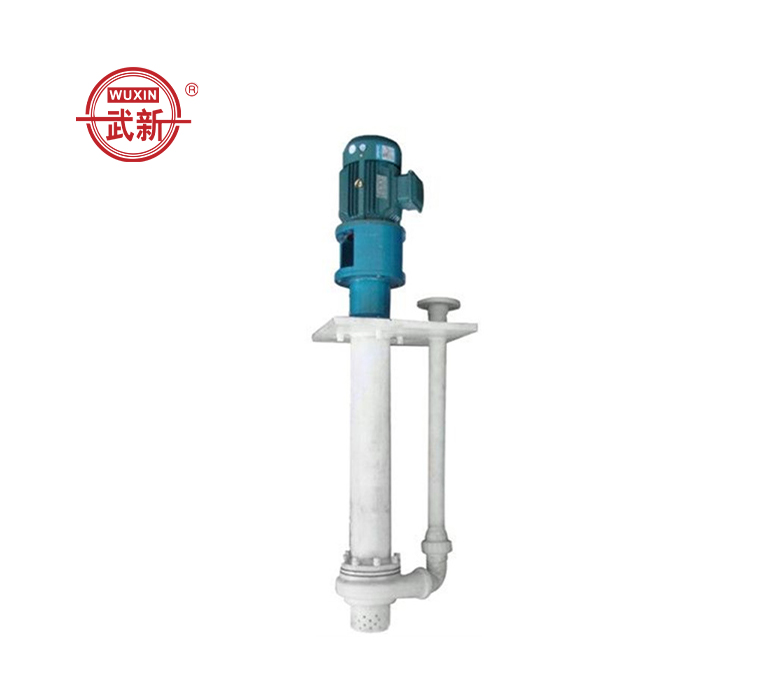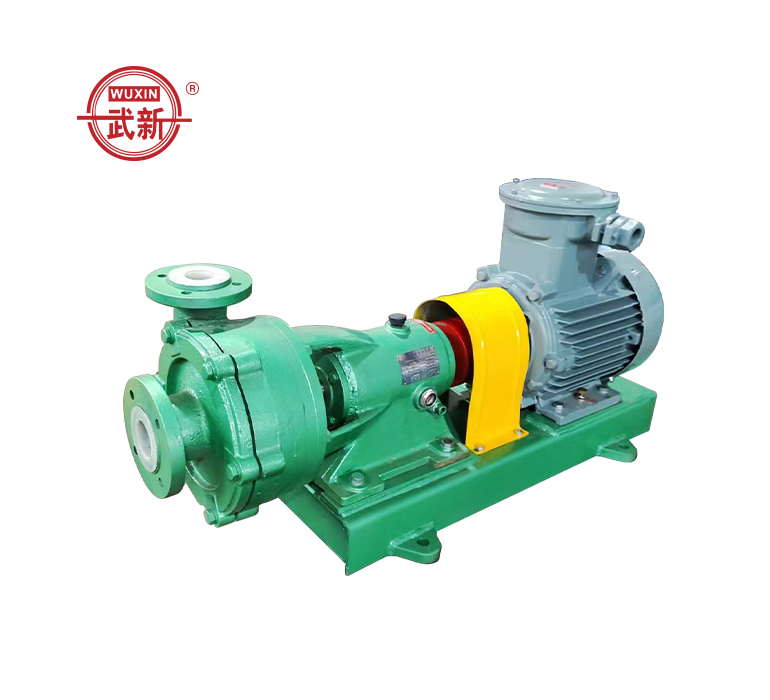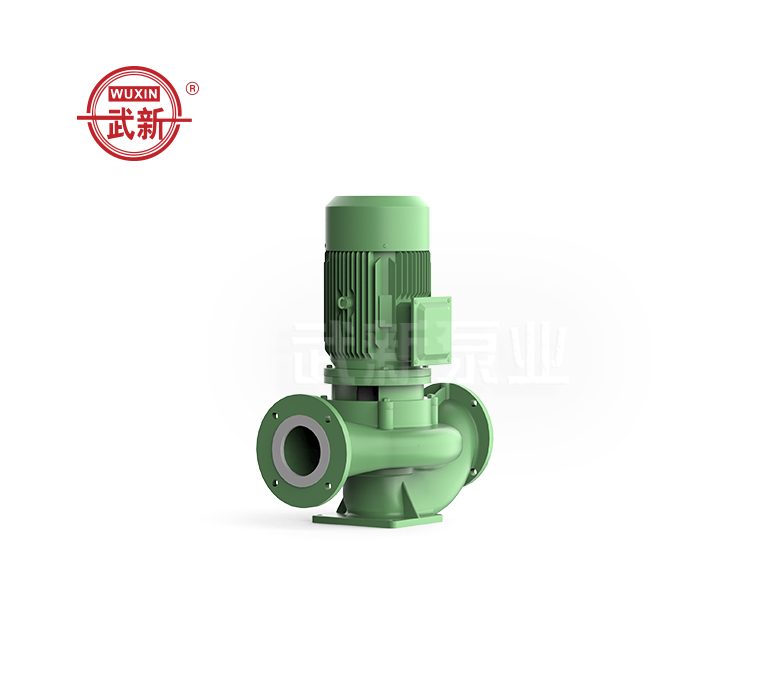

FSB Fluoroplastic Alloy Corrosion-Resistant Centrifugal Pump
Product inquiry: 0523-84832479Product introduction
FSB and FSB-L fluoroplastic-alloy corrosion-resistant centrifugal pumps are listed for long-term conveyance of acids, alkalis, salts, organic solvents, chemical reagents and other chemical media at -80°C to 150°C. Rapidly crystallizing media and hard solid particles are expressly excluded.
Product presentation
Product overview
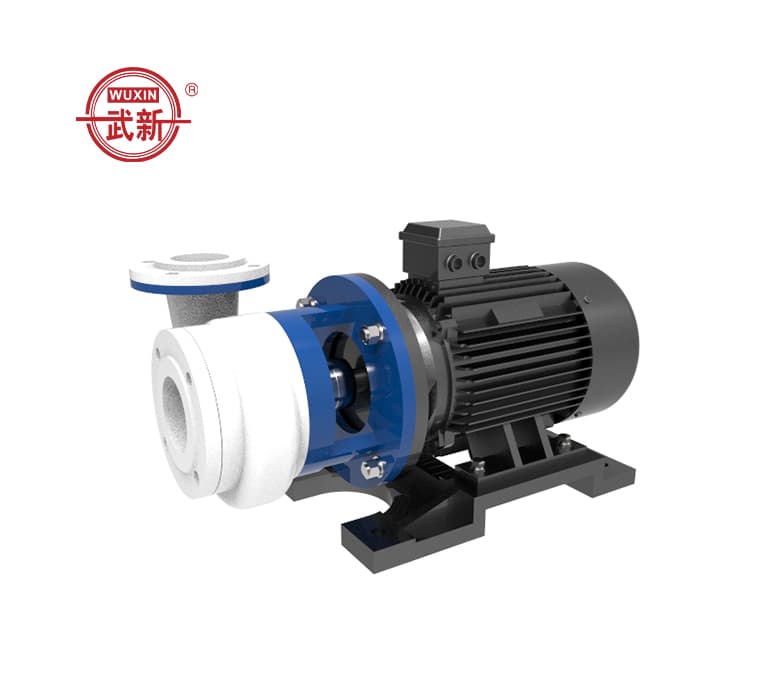
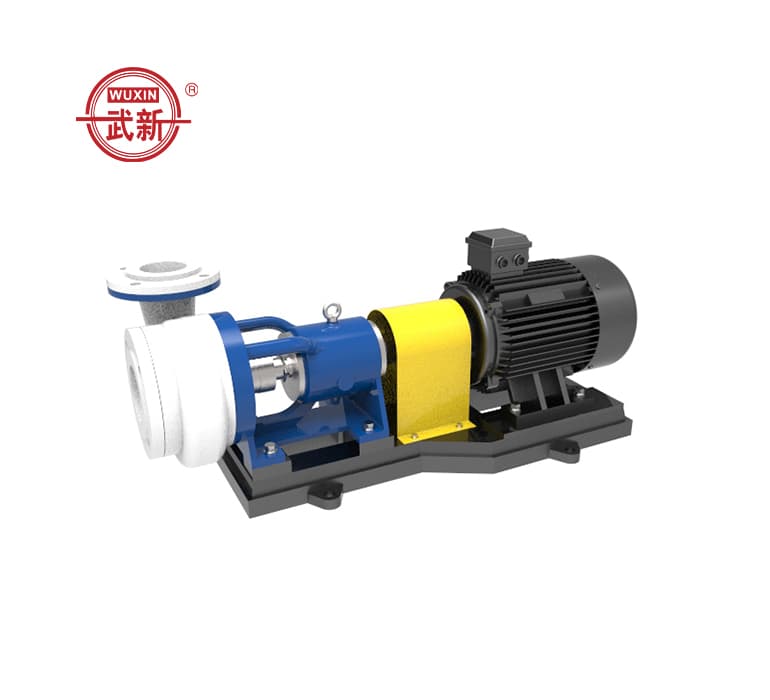
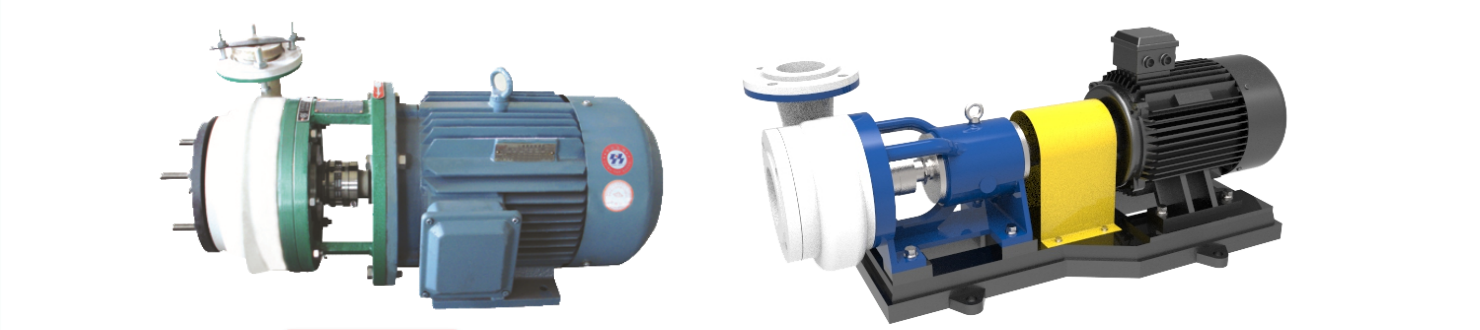
The FSB is close-coupled; the FSB-L is shaft-coupled and base-mounted. They share the series model key but have different installation and shaft arrangements, which must be checked for the selected variant.
- Wetted parts use a fluoroplastic alloy processed by high-temperature sintering and compression molding.
- Seal: external, single-face, balanced and self-adjusting, requiring no cooling water; WB2 or 169 may be selected for the duty.
- Seal materials: stationary rings can use high-purity aluminum oxide ceramic, silicon carbide, nickel-based alloy or cobalt-based alloy; rotating rings can use filled PTFE, silicon carbide, nickel-based alloy or cobalt-based alloy.
- The series is corrosion- and oxidation-resistant, with relatively high mechanical strength and ageing resistance, and is an alternative to pumps made from titanium, nickel, molybdenum or tungsten alloys.
FSB / FSB-L pump comparison
Model designation
80FSB-30L
- 80
- Nominal pump inlet diameter (mm)
- F
- Fluoroplastic-alloy pump material
- SB
- Single-stage, single-suction cantilever centrifugal pump
- 30
- Design-point head of 30 m
- L
- Base-mounted shaft-coupled type; without L, close-coupled without base
Performance data
Flow Q is shown in both m³/h and L/s; the two columns express the same operating value for convenient conversion.
| Model | Flow Q (m³/h) | Flow Q (L/s) | Head (m) | Speed (r/min) | Shaft power (kW) | Motor power (kW) | Efficiency η (%) | NPSHr (m) |
|---|---|---|---|---|---|---|---|---|
| 25FSB-10 | 1.5 | 0.42 | 10 | 2900 | 0.12 | 1.5 | 35 | 3.3 |
| 25FSB-18 | 3.6 | 1.00 | 18 | 2900 | 0.63 | 1.5 | 28 | 3.3 |
| 25FSB-22 | 3 | 0.83 | 22 | 2900 | 0.69 | 1.5 | 26 | 3.3 |
| 32FSB-20 | 5 | 1.39 | 20 | 2900 | 0.82 | 1.5 | 33 | 3.3 |
| 32FSB-30 | 5 | 1.39 | 30 | 2900 | 1.63 | 2.2 | 25 | 3.3 |
| 40FSB-20 | 10 | 2.78 | 20 | 2900 | 1.31 | 3 | 41.5 | 3.3 |
| 40FSB-25 | 10 | 2.78 | 25 | 2900 | 1.70 | 3 | 40 | 3.3 |
| 40FSB-30 | 10 | 2.78 | 30 | 2900 | 2.26 | 4 | 36 | 3.3 |
| 40FSB-40 | 10 | 2.78 | 40 | 2900 | 3.11 | 5.5 | 35 | 3.3 |
| 40FSB-50 | 10 | 2.78 | 50 | 2900 | 4.12 | 7.5 | 33 | 3.3 |
| 50FSB-20 | 15 | 4.17 | 20 | 2900 | 1.63 | 3 | 50 | 3.3 |
| 50FSB-25 | 15 | 4.17 | 25 | 2900 | 2.19 | 4 | 46.5 | 3.3 |
| 50FSB-30 | 15 | 4.17 | 30 | 2900 | 2.6 | 4 | 47 | 3.3 |
| 50FSB-40 | 15 | 4.17 | 40 | 2900 | 3.96 | 5.5 | 42 | 3.3 |
| 50FSB-50 | 15 | 4.17 | 50 | 2900 | 5.36 | 7.5 | 38 | 3.3 |
| 65FSB-20 | 29 | 8.06 | 20 | 2900 | 2.67 | 5.5 | 59 | 3.5 |
| 65FSB-25 | 29 | 8.06 | 25 | 2900 | 3.40 | 5.5 | 58 | 3.5 |
| 65FSB-32 | 29 | 8.06 | 32 | 2900 | 4.54 | 5.5 | 55 | 3.5 |
| 65FSB-40 | 29 | 8.06 | 40 | 2900 | 6.06 | 7.5 | 52 | 3.5 |
| 65FSB-50 | 29 | 8.06 | 50 | 2900 | 7.96 | 11 | 49.5 | 3.5 |
| 80FSB-20 | 50 | 13.88 | 20 | 2900 | 4.30 | 5.5 | 63 | 4 |
| 80FSB-25 | 50 | 13.88 | 25 | 2900 | 5.39 | 7.5 | 63 | 4 |
| 80FSB-30 | 50 | 13.88 | 30 | 2900 | 6.52 | 7.5 | 62.5 | 4 |
| 80FSB-34 | 50 | 13.88 | 34 | 2900 | 7.5 | 11 | 61.5 | 4 |
| 80FSB-40 | 50 | 13.88 | 40 | 2900 | 9.06 | 15 | 60 | 4 |
| 80FSB-50 | 50 | 13.88 | 50 | 2900 | 11.92 | 18.5 | 57 | 4 |
| 100FSB-20 | 80 | 22.22 | 20 | 2900 | 6.30 | 11 | 69 | 5 |
| 100FSB-25 | 100 | 27.78 | 25 | 2900 | 9.85 | 18.5 | 69 | 5 |
| 100FSB-30 | 100 | 27.78 | 30 | 2900 | 11.81 | 18.5 | 69 | 5 |
| 100FSB-40 | 100 | 27.78 | 40 | 2900 | 15.98 | 22 | 68 | 5 |
| 100FSB-50 | 100 | 27.78 | 50 | 2900 | 20.59 | 30 | 66 | 5 |
| 125FSB-30 | 180 | 50.00 | 30 | 2900 | 21.58 | 30 | 74 | 5 |
| 125FSB-45 | 200 | 55.5 | 45 | 2900 | 37.74 | 45 | 72 | 5 |
Note: performance values are clear-water test data. Motor power may need to be selected for the medium's specific gravity. Confirm the actual medium, concentration, temperature, flow, head and NPSH conditions.
Selection and operating boundaries
The fluoroplastic-alloy material is listed for chemical media that do not crystallize rapidly.
It can also handle selected neutral acid, alkali and salt duties associated with vinylidene fluoride and engineering plastics, plus wastewater without organic oxidizing media. Confirm medium compatibility against the selected material, concentration, temperature and other duty conditions.
The FSB/FSB-L difference is in the shaft connection and base arrangement, not in the permitted-media range. Check the pump arrangement, application conditions and performance data together during selection.
Shaft power, motor power, efficiency and NPSHr are clear-water test data and are not a guarantee for a chemical medium or arbitrary operating point.
Rapidly crystallizing media and hard solid particles are not permitted. Verify that the medium will not crystallize or form hard particles in the pump and that material, seal and motor selection suit the duty.
Parameters and material notes are not an engineering certification for a specific duty; selection requires formal technical documentation and a medium-compatibility review.
Product information
| Model designation | FSB Fluoroplastic Alloy Corrosion-Resistant Centrifugal Pump |
|---|---|
| Catalog category | Non-metallic Corrosion-resistant Pump |
Related questions
Are non-metal and fluoroplastic pumps the same thing?
Not exactly. Non-metal is a wider design/material family, while fluoroplastic is one material clue. Solid, lined, clamped, magnetic-drive and sealed designs must still be distinguished.
Do not make unconditional material claims across media or concentration ranges, and do not extend one material/model limit to the whole family.
How is the duty point of a chemical centrifugal pump determined?
Build the system curve from static head, piping loss, equipment differential pressure and pressure conditions at target flow, then find its intersection with the exact pump curve.
Without the exact curve, material list and seal configuration, only the review method can be stated; final size, life or operating outcome cannot be confirmed.
What should be confirmed before selecting or working on pumps for corrosive, flammable, explosive, toxic or volatile media?
Obtain the SDS and complete duty first, identify corrosion, toxicity, fire/explosion, volatility, reactivity and exposure routes, then review wetted materials, containment/disposal, hazardous-area equipment, monitoring, emergency and personnel controls separately. A pump-family name does not establish risk control.
The project owner or responsible team must confirm site safety through professional risk assessment, relief and disposal design, hazardous-area equipment compliance, rescue arrangements and medical and occupational-health requirements.
Which equipment information is needed when requesting an operation manual?
Provide the complete model and model suffix, a clear nameplate photo, order or serial information, current configuration and required language. If the unit has been modified, describe the change so the manual is not matched from the series name alone.
An unregistered file requires public-release approval before it is shared. A filename, product photo or similar model cannot replace complete equipment-identity and revision checks.
What is the minimum data set for pump selection and enquiry?
Provide medium composition, concentration, density, viscosity and temperature; normal/minimum/maximum flow and head; suction, discharge and system pressure; available NPSH; solids or particle data; installation arrangement and space; power supply; and environmental conditions including indoor/outdoor location, temperature/humidity, altitude and hazardous-area classification.
The selection-input checklist gathers process and equipment information. Process design, piping calculations, final material configuration, hazardous-area suitability review and final quotation require the complete project package, and every missing field must remain explicitly open.
What should be checked first for the foundation and installation space?
First confirm foundation dimensions, anchor locations, load capacity and level from the order drawing. Then isolate the unit from adjacent-machine vibration and retain access for lifting, motor removal, inspection and disassembly.
Civil calculations, piping stress analysis, lifting plans, electrical codes, site safety approval and order drawings must be confirmed by the responsible disciplines and project documents. Dimensions from a similar model must not replace order drawings.
Which pumps require coupling-alignment checks?
Use the sectional drawing to identify direct drive, a separate coupling or a vertical shaft arrangement. Apply the model-specific alignment procedure only to the relevant connection; one tolerance does not fit every pump.
Alignment tolerance, jog duration and electrical steps must be determined for the exact model and site procedure. Perform a rotation check only after energy control, guarding and site authorization are complete.
Why is one start-up valve arrangement unsuitable for every pump?
Conventional centrifugal, self-priming and submerged pumps, as well as magnetic-drive pumps with different circulation paths, have different suction states, venting paths and permissible flow ranges. Valve positions must match the exact model and system control logic.
Remote start-up must follow the site authorization procedure. Valve positions, vent cycles and closed-valve duration must be determined from the matching manual revision and site procedure, and must not be transferred across models.
Which signals should be monitored during normal pump operation?
As configured, record flow, suction/discharge pressure, current, speed or frequency, vibration, sound, bearing or critical-point temperature, plus level, flushing, cooling and alarm states.
The site team must confirm continued operation through interlock settings, instrument calibration, root-cause analysis and maintenance permits. Do not restart until the cause and safety conditions are confirmed.
What must be completed before maintenance or disassembly?
Follow site procedure for shutdown, energy isolation, valve locking, depressurization, cooling, draining, flushing or decontamination, and verify that unintended start is prevented. Hazardous media also require the applicable work permit and personal protection.
Do not substitute drawings, part dimensions or materials from a similar model. A single symptom cannot establish root cause or a replacement part without site inspection.